AI literacy gives you the understanding and perspective needed to make informed decisions about the rapid evolution and deployment of AI in today’s world.
If AI gives you all the answers, why do we need AI Literacy?
Concretely, AI literacy is the ongoing investigation of all the questions surrounding AI.
What is it? How does it work? What makes it work? How to use it? What societal implications does it have? Who governs it? Who decides the AI training dataThe information used to teach an AI model during training. Training data includes, social media, scholarly papers, news articles books etc. However not everything on the internet is included. Websites can block AI companies from using their data. The dark web and private internets are not included. More? How can we ethically use it? How can we evaluate and confirm AI output? What impact will it have on future generations?
In the framework for AI literacy, the questions are the answers!
AI supplies answers. You, the human, supply the questions and judge the answers.

What is AI and how does it work?
AI or artificial intelligence refers to computer systems designed to perform human tasks that require human intelligence. By recognizing patterns and learning from examples a computer system can make decisions and as we see with chatbots process natural language. At times that natural language can feel like a long-lost friend. It can be but not in a human way. AI is just switches, chips, code, and other hardware all rolled in to one predictive algorithmA set of rules or instructions a computer follows to solve a problem or perform a task. Think of it like a recipe, but instead of cake, the output could be a chatbot answer. More. No heart, no soul, no moral compass, just wires and numbers.
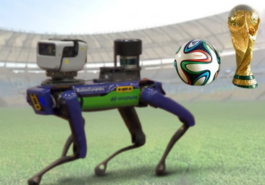
With the explosion of ChatGPTA generative AI assistant created by OpenAI that can answer questions, write, brainstorm, explain ideas, and help with everyday tasks. More in 2022, the scope of AI was narrowed. Ironically, this powerful form of AI overshadowed all the existent AIs. AI has been quietly expanding medicine, not in paperwork, but in studying blood samples, in developing aids for quadriplegics, in helping Doctors make better choices for their patients. AI is in warfare, using navigation systems and human input to program both defensive and offensive moves. It is in surveillance like Spot the AI robot dog. AI is not new or only limited to chatbots. AI is the most transformative technology to date.
In addition to flowcharts and code, AI requires an extensive infrastructure in the form of hyperscale data centers. The centers need raw hardware in the form of chips and switches, computers and casings, and the land to build and store these computers. Once the computer campus is built, it uses natural resources like electricity and water to run efficiently. All of this requires billions of dollars in financing as well as the involvement of local and federal governments.
Use and Apply AI
Most of us use AI every day without giving it a second thought. We ask Siri to send a text. We tell Alexa to turn the lights off. We use GPS to guide our travels. Like these, there are a myriad of daily activities we participate in where AI is working in the background. With the advent of ChatGPT, followed by Gemini, CopilotA generative AI assistant created by Microsoft that helps people write, summarize, search, create images, analyze information, and complete tasks inside Microsoft tools like Word, Excel, PowerPoint, Outlook, Edge, and Windows. More, Claude, and others, we also started drafting emails, creating images, and unfortunately cheating on essays. Different industries use different AI models to help them simplify tasks, analyze content, make predictions, and support human decision making. Computer visionA field of AI that helps computers interpret images, videos, and visual information. Used in cars, medicine, security, and phones. More, for example, can be used in healthcare for pathology screening, in warfare with drones and in self-driving cars. Conversational LLMs are used in education and customer service, and predictive analytics can be used in Finance and banking for market analysis and fraud detection.
Whether you use AI at work or for personal use there is an art and method of asking the correct questions and giving the proper instructions to achieve the desired result. This is called Prompt EngineeringThe practice of writing clear and effective prompts to get better AI respones. More. It reminds me of the 5 W’s and How, from journalism class.
Who is AI going to be or representing? A teacher, a parent, a store manager or in my case a retired teacher eager to learn.
What is the context of the request? Who is it for? What dataInformation used by computers and AI systems to learn, compare, predict, or respond. The raw material for AI, More is needed? Are there constraints if so, what are they?
How is the request going to be done? What are the instructions needed to achieve it?
And lastly how should the output be delivered? In code, in a table, in paragraph.
I recently asked ChatGPT to help me practice my Spanish before I made a long distance call to Spain to talk to my ailing uncle. My promptThe instruction, question, or request a person gives to an AI system. The better the prompt the better the outcome. More was I am a retired woman living in the US. I want to practice my Spanish so I could talk to my uncle who is sick. I need a voice chat. With that I was practicing my Spanish for a specific situation. ChatGPT acted like my uncle, and I rehearsed the conversation before I made the call.
To help with prompting here are some open-source guidelines. LearnPrompting.org, OpenAI Prompt Engineering Documentation, Anthropic Interactive Prompt Engineering Tutorial.
Evaluate and Create
By now we have all heard of the chatbotA computer program designed to have a conversation with a person through text or voice, such as ChatGpt, Claude, Gemini, Copilot etc. More hallucinations, made up answers, and biasWhen an AI system gives unfair or slanted results because of patterns in its training data or design. More. We should heed and understand the disclaimer from AI companies, they sometimes make mistakes. Does this mean it’s not valuable? Absolutely not! What we must do is use AI as a collaborative partner, we must not hand over the reins. We do what we did with Google and other search engines we adapt the SIFT Method developed by Mike Caulfield a digital literacy expert.
- Stop-be aware of the information read, does it evoke an emotional response, how much do you already know about the subject, are there sources given? Does it make sense? Is it timely?
- Investigate the source-question? Ask for sources. Evaluate sources.
- Find better coverage-look for multiple sources and fact check. Here are two fact checking sources.
- Trace Claims Quotes and media to Original Context. Do your due diligence. Open, read and verify all links.
AI is mute without human intelligence. Human intelligence is needed to develop, collaborate with, evaluate, and direct AI to maximize all the benefits.
Ethics and AI
The ethics of AI are as multifaceted and broad as AI itself. Is it ethical to have ChatGPT author an essay for you? Is it ethical to post disparaging AI images? How ethical is the trainingThe process of teaching an AI model by exposing it to data so it can learn patterns. More data given to AI? How ethical are the profit margins generated by AI? How ethical is it to put an electrical tower in someone’s backyard to generate electricity for the data centers? The ethics of AI are being explored and developed while AI becomes increasingly woven into our lives.
Individually, locally, by AI company executives, at a federal and world level, AI ethics are being discovered as AI grows. Ideally, ethics should come first! As a society we can introduce AI ethics to the Beta generation before they can understand what AI is. The rest of us will have to catch up and catch everyone else up.
Ethics, or having a moral compass, is sometimes thought to be inherent in us, and sometimes it is believed we learn it through education and living. Do unto others as you would have them do unto you. Be honest. Be kind. Be fair. Work towards the common good. Leave the world a little better for the coming generations. There is a plethora of adages supporting the latter. The adages are not enough. We need real learning, real adaptation, and real implementation, and real transparency. Ethics must be deliberately and comprehensively taught from an early age.
At an early age we must learn to take pride in our work. To collaborate with others for the betterment of the group. To set personal limits and abide by them. To give others including AI tools credit for their work. Leaving the room a little better than we found it. To question our surroundings. To make value judgments. These lessons can be applied to AI Personal Ethics. Use AI to enhance our lives and not take over our lives. Never let AI think or express thoughts for us. Keep the use of our brain active and firing.
Established individual moral compasses are required for local and civic AI ethics. Now we expand on collaboration with others and AI to form better decisions on the use of AI in society. What will life look like after AI implementations? What effect will it have on our economics, individually and as a society? What will happen to the nature of work and jobs? How will the environment and world politics be affected by AI? What will be a fair economic modelThe trained AI system that uses patterns from data to make predictions, generate content, or respond. The "engine" behind the tool. More? How will these changes be monitored and reined in? Local municipalities and governments must wrestle with these changes and other unforeseen changes that will occur.
Tech giants, federal governments, and world organizations have the task of generating and abiding by a huge and complex code of AI ethics at the same time as AI develops. The questions are complicated, serious, and intertwined. The answers can be scary and dystopian. Who monitors the giant frontier companies? Who controls data training to eliminate bias? Who controls AI in warfare? How do world governments agree on use? How can we stop cyber-attacks? How about the environmental and economic impact of AI infrastructure? These questions and many others are being investigated and documented by hundreds of agencies and governments.
Some of the major Frontier AI companies in the US have formed the Frontier Model Forum to advance AI as well as keep it safe and secure. NIST, the National Institute of Standards and Technology, develops standards testing methods and risk management guidelines to help build evaluation and use AI safely. Besides that, every sector in Industry has its own set of AI standards. Nationally, each state, as well as federal government, has a continuously growing set of AI standards. Abroad and on the global front there are several agencies developing AI ethics. The UN Global Dialogue on AI Governance met in July 2026 to discuss AI risks with governments and other stakeholders. During the 2023 G7 summit, held in Hiroshima, Japan, The Hiroshima AI Process was started where companies can report on AI safety, security, risk management, and transparency. The EU AI Act regulates AI in Europe with laws and consequences. Everyone is watching AI develop with amazement and cautious fear.
This brings us back to personal AI ethics. Don’t cheat. Don’t give your life and brain to AI. Take pride in your own work. Collaborate with others and AI. And learn AI Literacy. Give your voice and vote the knowledge it needs to rigorously evaluate the changes AI will bring.
List of terms
- training data
- algorithm
- ChatGPT
- Copilot
- Computer vision
- Prompt Engineering
- data
- prompt
- chatbot
- bias
- training
- model